When Your Check Engine Light Comes On, You Need Answers You Can Trust
That sinking feeling when your check engine light illuminates isn’t just about the light itself. It’s about the uncertainty it represents—what’s wrong, how much it will cost, and whether the mechanic you choose will be honest. You’ve likely experienced dealerships quoting thousands for unnecessary repairs, chain stores upselling problems, or discount mechanics whose fixes don’t last.
Every strange noise, hesitation, or rough idle triggers worry. Is it minor or catastrophic? Can you afford to wait, or will ignoring it lead to disaster? Your vehicle is more than transportation—it’s your lifeline. When you can’t trust your engine, everything feels uncertain.
You’re not looking for the cheapest option anymore because cheap has cost you more in the long run. You want a mechanic who diagnoses honestly, explains clearly, fixes properly, charges fairly, and stands behind their work.
Understanding Modern Engine Diagnostics in Tucson
Modern vehicles are complex machines with computer systems monitoring dozens of components. When something goes wrong, your vehicle’s onboard diagnostic system triggers the check engine light and stores trouble codes. But those codes are just the starting point. For example, an “oxygen sensor malfunction” code doesn’t always mean the sensor needs replacing—it could be a vacuum leak, fuel system issue, or even a loose gas cap.
Today’s vehicles contain more computing power than the spacecraft that landed on the moon. Your engine control module constantly monitors sensor inputs, adjusts fuel delivery, manages ignition timing, and controls emissions systems—all while you’re driving. When any component falls outside normal parameters, the system records a diagnostic trouble code and illuminates the check engine light to alert you.
However, these codes don’t tell the complete story. They indicate which circuit or system is reporting abnormal readings, but they don’t necessarily identify the failed component. This is where experienced diagnostics separate professional shops from parts-changers who simply replace whatever the code mentions without proper testing.
Comprehensive Engine Diagnostic Services
At Monsoon Automotive, we go beyond reading codes. Our ASE-certified technicians use advanced diagnostic equipment and decades of experience to pinpoint the root cause of your engine problems.
Our diagnostic process includes:
- Professional-grade computer diagnostics accessing manufacturer-specific data
- Live data stream analysis to monitor engine performance in real-time
- Visual inspection of engine components, belts, hoses, and fluid levels
- Compression and cylinder leak-down testing to assess internal engine health
- Fuel pressure testing to verify proper fuel system operation
- Ignition system testing for spark plugs, coils, and wires
- Emissions system diagnostics for catalytic converters, oxygen sensors, and EVAP systems
- Examination of vacuum lines, air intake systems, and PCV systems
Our diagnostic approach begins with a thorough conversation about what you’ve experienced. We want to know when the problem occurs, what conditions trigger it, and what symptoms you’ve noticed. These details guide our investigation and often reveal patterns that point directly to the source of the problem.
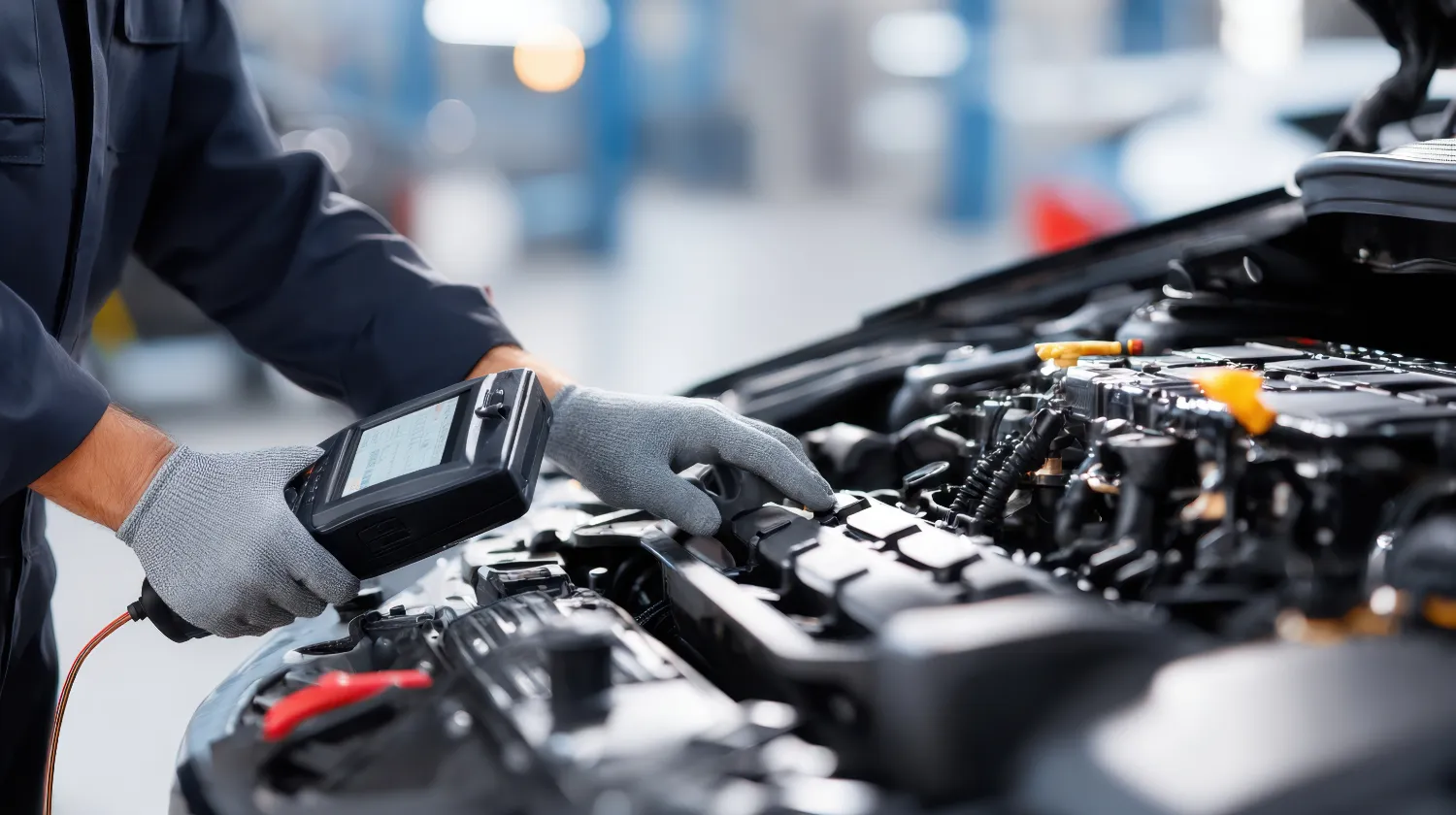
We then connect our professional-grade diagnostic equipment to your vehicle’s computer system. Unlike the basic code readers available at auto parts stores, our scan tools access manufacturer-specific data and provide detailed information about every monitored system. We can view live data streams showing real-time sensor readings, watch how your engine responds to changing conditions, and identify intermittent problems that might not trigger a code during a simple scan.
Visual inspection remains a critical component of proper diagnostics. Our technicians examine your engine compartment for obvious issues like damaged hoses, loose connections, fluid leaks, or worn belts. Sometimes the problem is visible before any electronic testing begins. We check fluid levels and condition, looking for contamination or degradation that might indicate internal problems.
When necessary, we perform specialized tests to evaluate internal engine condition. Compression testing measures the pressure each cylinder produces during the compression stroke, revealing problems like worn piston rings, damaged valves, or head gasket failures. Cylinder leak-down testing goes further by pressurizing each cylinder and measuring where air escapes, pinpointing the exact location of internal leaks.
Fuel system testing verifies that your engine receives fuel at the correct pressure and volume. We measure fuel pressure under various conditions, check for pressure drops that indicate failing pumps or regulators, and evaluate fuel injector operation. Ignition system testing ensures each cylinder receives adequate spark at the proper time. We test spark plugs, ignition coils, and related components to identify misfires or weak ignition.
Emissions system diagnostics address the complex network of components that control exhaust emissions. We test oxygen sensors, catalytic converter efficiency, evaporative emissions systems, and exhaust gas recirculation systems. These components directly affect engine performance, fuel economy, and emissions compliance.
We start by listening to your observations—rough idle, hesitation, unusual smells—and use them to guide our investigation. We explain findings in plain English, show you failed components, and provide a detailed written estimate with transparent information. No pressure, no upselling—just honest information to help you make informed decisions.
Common Engine Problems We Diagnose and Repair
Check Engine Light Diagnostics and Repair
Your check engine light can signal anything from a loose gas cap to serious engine damage. Many shops use this as an opportunity to upsell unnecessary repairs. We thoroughly investigate the actual cause and provide honest recommendations.
Common check engine light causes we address:
- Oxygen sensor failures affecting fuel economy and emissions
- Catalytic converter issues that worsen if ignored
- Mass airflow sensor problems reducing performance and efficiency
- Ignition system failures like spark plugs, coils, and wires
- EVAP system leaks in emissions control
- Thermostat malfunctions affecting engine temperature
- EGR valve problems impacting emissions and performance
The check engine light serves as your vehicle’s primary warning system for engine and emissions problems. When it illuminates, your vehicle’s computer has detected a malfunction that affects emissions, performance, or driveability. The light can appear solid or flash, with flashing indicating a severe problem like engine misfire that can damage your catalytic converter.
We’ve saved customers thousands by diagnosing minor issues misrepresented as major repairs elsewhere. For example, one customer was quoted over $2,000 for a catalytic converter replacement, but we found a simple oxygen sensor failure and fixed it for a fraction of the cost.
Engine Performance Issues and Misfires
Engine misfires, hesitation, or rough running create anxiety about reliability and safety. These issues often stem from ignition system problems, fuel delivery issues, or air intake restrictions.
Performance problems we resolve:
- Misfires causing rough running and potential catalytic converter damage
- Hesitation during acceleration indicating fuel or ignition issues
- Loss of power from restricted exhaust, fuel system problems, or timing issues
- Rough idle due to vacuum leaks, dirty injectors, or ignition faults
- Stalling caused by idle control or fuel system failures
- Poor fuel economy from sensor failures or engine management issues
Misfires are particularly concerning as they can damage your catalytic converter. We use advanced diagnostics to identify the exact cylinder and cause, saving you money by replacing only the failed components.
Fuel System Diagnostics and Repair
Your engine’s fuel system must deliver precise fuel at the correct pressure for optimal performance. Fuel system problems can cause hard starting, poor performance, or complete failure.
Fuel system services we provide:
- Fuel pump testing and replacement
- Fuel injector cleaning and replacement
- Fuel filter replacement to prevent contamination
- Fuel pressure regulator diagnosis and repair
- Fuel line inspection and repair for leaks or restrictions
- Throttle body cleaning to restore airflow
- Fuel system pressure testing for proper operation
Modern fuel injection systems operate at high pressures and require specialized equipment for accurate diagnosis. We have the tools and expertise to pinpoint issues like failing pumps, clogged injectors, or pressure regulation problems.
Why Engine Problems Get Worse When You Wait
Ignoring engine problems always costs more in the long run. A failing oxygen sensor can damage your catalytic converter, turning a $300 repair into a $1,500 problem. A minor coolant leak can lead to overheating and warped cylinder heads, requiring an engine rebuild.
Engine problems rarely fix themselves. Instead, they progress from minor issues to major failures. That slight misfire that seems tolerable now sends unburned fuel into your catalytic converter where it burns and causes damage. The small coolant leak that just requires occasional top-offs eventually causes overheating that warps cylinder heads or blows head gaskets. The check engine light you’ve been ignoring might indicate a problem that’s damaging other components.
The Monsoon Automotive Difference
Honest Diagnostics Without the Upsell
We diagnose accurately, explain clearly, repair properly, and charge fairly. Our technicians are paid to fix cars, not sell unnecessary services. We use professional-grade equipment and systematic testing to identify the root cause of your problem.
ASE-Certified Technicians With Real Expertise
Our ASE-certified technicians have decades of experience across all makes and models, from domestic vehicles to European luxury cars to Asian imports. They stay current with evolving automotive technology to ensure proper diagnosis and repair.
Schedule Your Engine Diagnostic Appointment Today
Your engine problem won’t fix itself, and waiting will only make it worse. Call Monsoon Automotive at (520) 305-4908 to schedule your diagnostic appointment. Visit us at 6722 East Tanque Verde Road, Tucson, AZ 85715, and let us provide honest answers and quality repairs.
You deserve trustworthy service, reliable repairs, and peace of mind. Contact Monsoon Automotive today, and let’s solve your engine problems the right way.