That Sinking Feeling When Your Engine Starts Running Rough
Driving down East Tanque Verde Road, you feel hesitation when pressing the accelerator. The engine stumbles, and the check engine light glows ominously. Your stomach tightens, anticipating another repair shop visit, unsure if you’re being told the truth, and fearing a padded bill.
Maybe your vehicle idles roughly at stoplights, or you’ve noticed worsening gas mileage, costing extra money. Perhaps your car struggles to start in the morning, leaving you anxious about being stranded.
These aren’t minor inconveniences. They’re symptoms of fuel system problems that will worsen if ignored, affecting your ability to provide reliable transportation.
Understanding Your Vehicle’s Fuel System and Why It Matters
Your fuel system delivers the precise fuel amount your engine needs at the right pressure and moment. Think of it as your vehicle’s circulatory system—when compromised, every aspect of performance suffers. Modern fuel systems operate under tremendous pressure and must maintain exacting tolerances to meet today’s efficiency and emissions standards.
The Components That Keep Your Vehicle Running
Your fuel system includes several interconnected components:
- Fuel pump: Moves gasoline from the tank to the engine at the correct pressure.
- Fuel filter: Removes contaminants before they reach sensitive components.
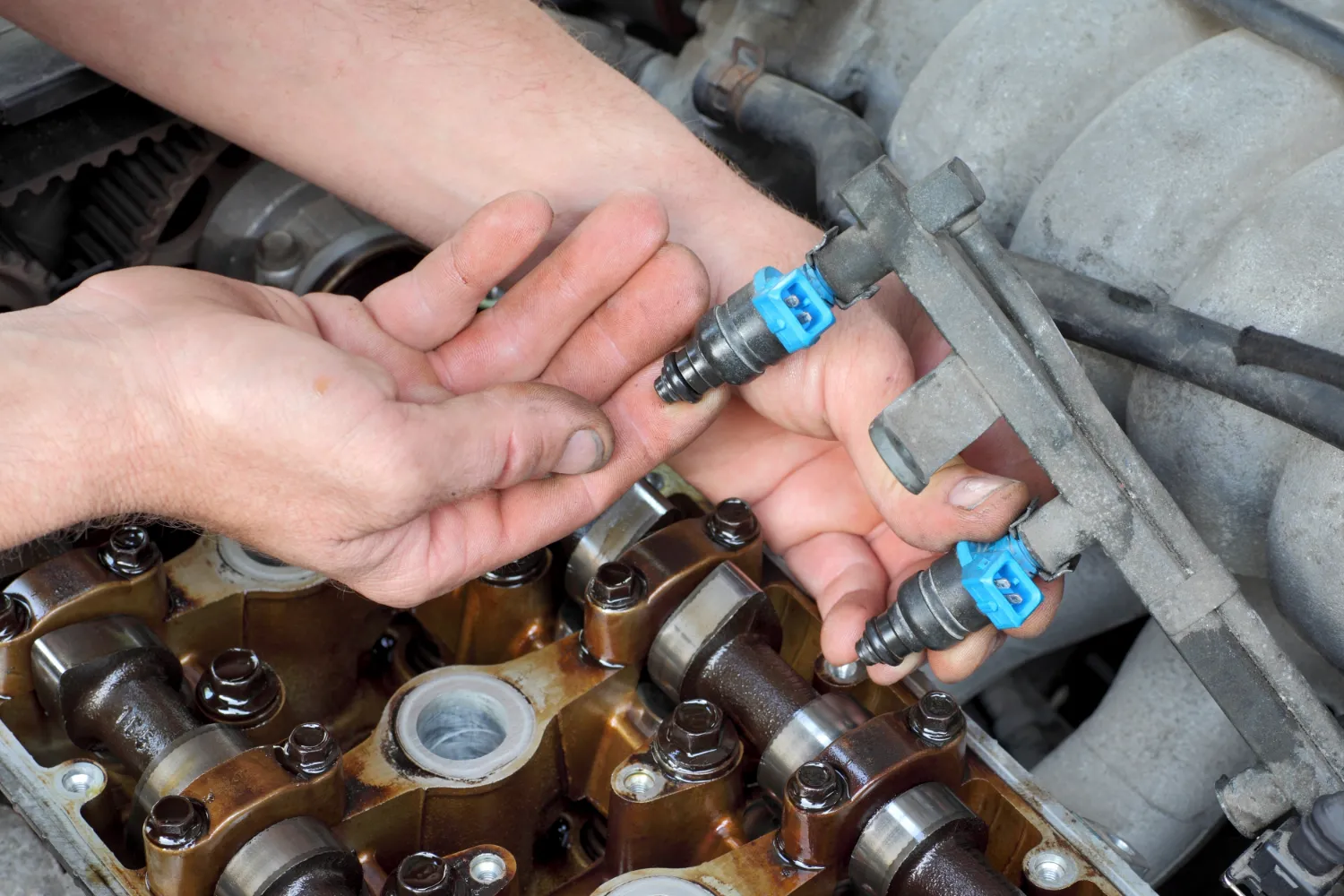
- Fuel injectors: Spray atomized fuel into combustion chambers with precision.
- Fuel pressure regulator: Maintains consistent pressure throughout the system.
- Fuel lines and connections: Transport fuel safely throughout the vehicle.
- Intake valves and ports: Can accumulate carbon deposits affecting performance.
The fuel pump is the heart of your fuel system, typically located inside the fuel tank. Modern fuel pumps are electric and must generate enough pressure to overcome resistance in the fuel lines and injectors while delivering sufficient volume to meet your engine’s demands.
Your fuel filter serves as the first line of defense against contamination. Gasoline can contain rust particles, dirt, water, and other debris. The filter captures these contaminants before they can reach your fuel injectors, which have extremely tight tolerances.
Fuel injectors atomize fuel into a fine mist and spray it in a specific pattern. Deposits on injector tips or inside the injector body can lead to incomplete combustion, reduced power, and increased emissions.
The fuel pressure regulator ensures that fuel pressure remains constant regardless of engine demand. A failing regulator can cause pressure that’s too high or too low, creating drivability problems and potentially damaging other components.
The Real-World Impact of Fuel System Problems
Fuel system issues affect your daily life in tangible ways. A failing system means you can’t trust your vehicle to start reliably, you’re wasting money on fuel, and you’re constantly risking a breakdown at the worst possible moment.
The financial impact extends beyond fuel costs. A poorly maintained fuel system accelerates wear on spark plugs, oxygen sensors, and catalytic converters. Dirty injectors force your engine to work harder, stressing components and potentially leading to burned valves, damaged pistons, or even complete engine failure.
Beyond mechanical concerns, there’s the environmental impact. A poorly maintained fuel system produces higher emissions, contributing to air pollution and potentially causing your vehicle to fail emissions testing.
Comprehensive Fuel System Services That Actually Fix the Problem
At Monsoon Automotive, we use professional diagnostic equipment to identify fuel system problems accurately, recommending only necessary services. Our approach is methodical and thorough, beginning with comprehensive testing to establish baseline performance metrics and identify deviations from manufacturer specifications.
Professional Fuel Injection Cleaning Service
Fuel injectors operate in a harsh environment, accumulating carbon deposits and varnish over time. Symptoms of dirty injectors include rough idling, sluggish acceleration, worsening fuel economy, and black smoke from the exhaust.
Our cleaning service uses professional equipment to deliver concentrated cleaning solutions directly to your injectors under controlled conditions. This process removes deposits, restores proper spray patterns, improves throttle response, increases fuel economy, and reduces emissions.
During the service, we test each injector’s flow rate and spray pattern to ensure they’re operating within manufacturer specifications. If any injectors are damaged or worn beyond what cleaning can address, we’ll recommend replacement of only those specific injectors.
Fuel Filter Replacement and System Protection
Your fuel filter defends against contaminants that would otherwise damage expensive components. As it captures debris, it gradually clogs and restricts fuel flow, forcing your pump to work harder. Many manufacturers recommend fuel filter replacement every 30,000 to 60,000 miles, though this varies by vehicle and driving conditions.
Our comprehensive fuel filter replacement service includes:
- Thorough inspection of the current filter’s condition.
- Replacement with high-quality filters meeting or exceeding OEM specifications.
- Complete fuel system pressure testing to verify proper operation.
- Detailed inspection of fuel lines and connections for leaks or deterioration.
Regular filter replacement is one of the most cost-effective ways to protect your fuel system and prevent expensive repairs.
Fuel Pump Testing, Diagnosis, and Replacement
Fuel pump problems often develop gradually, with symptoms like hesitation during acceleration, engine surging, starting problems, or a loud whining noise from the fuel tank. In the final stages of failure, the vehicle may fail to start entirely.
We perform comprehensive fuel pump diagnostics, including:
- Fuel pressure testing at idle, under load, and during acceleration.
- Electrical system testing to verify proper voltage and ground connections.
- Fuel volume testing to ensure the pump can deliver sufficient flow.
- Complete inspection of the pump assembly, including the fuel level sender.
If replacement is needed, we use quality components designed for your specific vehicle. Proper installation is critical—we ensure all electrical connections are secure, fuel lines are properly routed, and the pump assembly is correctly sealed to prevent leaks.
Fuel Pressure Regulator Service and Repair
Your fuel pressure regulator maintains consistent pressure throughout the fuel system. When a regulator fails, symptoms can vary depending on whether it’s stuck open or closed. A regulator stuck open causes low fuel pressure, resulting in hard starting and hesitation. A regulator stuck closed causes excessive pressure, leading to poor fuel economy and black exhaust smoke.
Our technicians diagnose regulator problems through systematic testing, measuring fuel pressure under various conditions, inspecting vacuum lines for fuel contamination, and testing the regulator’s response to changes in engine load.
Complete Fuel System Inspection and Preventive Maintenance
A comprehensive fuel system inspection identifies potential problems before they leave you stranded. Our thorough inspection includes:
- Fuel pressure and volume testing under various operating conditions.
- Injector flow and spray pattern analysis using professional equipment.
- Fuel filter condition assessment and contamination check.
- Fuel pump performance evaluation and electrical system testing.
- Detailed inspection of fuel lines and connections for leaks or deterioration.
For vehicles with direct injection engines, we pay particular attention to intake valve deposits, offering specialized cleaning services to address this increasingly common problem.
Why Tucson Drivers Choose Monsoon Automotive for Fuel System Service
Diagnostic Precision Before Any Repair Recommendation
We use advanced diagnostic equipment to identify fuel system issues accurately before recommending any service. Our approach is methodical and evidence-based, ensuring you’re not paying for unnecessary repairs.
Transparent Communication Every Step of the Way
Before any work begins, you’ll know exactly what’s wrong with your vehicle, why it needs addressing, what the repair involves, and how long it will take. No surprises, no hidden fees, and no pressure tactics.
Certified Technicians Who Work on All Makes and Models
Our ASE-certified technicians have the training, experience, and tools to service any fuel system, regardless of your vehicle’s make or model. We regularly invest in ongoing education to stay current with evolving automotive technology.
Fair and Honest Service
We provide straightforward information about your vehicle’s needs, presenting our recommendations clearly and honestly. Our reputation in the Tucson community is built on integrity and quality workmanship.
Schedule Your Fuel System Service Today
If your vehicle is showing signs of fuel system problems—rough idling, hesitation, poor fuel economy, or starting difficulties—don’t wait for a complete failure. Contact Monsoon Automotive today at (520) 305-4908 or visit us at 6722 East Tanque Verde Road, Tucson, AZ 85715. You can also email us at Service@MonsoonAuto.com to schedule your appointment or ask questions about your vehicle’s symptoms.
Experience the difference that honest, professional automotive service makes. Your vehicle—and your peace of mind—are worth it.
Monsoon Automotive 6722 East Tanque Verde Road Tucson, AZ 85715 (520) 305-4908 Service@MonsoonAuto.com
Where Quality Reigns.