That Grinding Sound When You Press the Brakes Isn’t Going Away On Its Own
Driving down Speedway Boulevard, you press the brake pedal and hear a grinding noise—or maybe a high-pitched squeal. Perhaps the brake pedal feels spongy, sinking closer to the floor before your vehicle stops. You know something is wrong, but the real anxiety comes from not knowing how bad it is, how much it will cost, or whether you can trust the mechanic.
Brake problems never improve on their own. That grinding sound is metal scraping against metal, causing exponential damage with every mile. What starts as a simple pad replacement can quickly escalate into rotor damage, caliper failure, and even compromised wheel bearings. The longer you wait, the more expensive and dangerous the situation becomes.
Why Tucson Drivers Struggle To Find Honest Brake Repair
The brake repair industry has earned its bad reputation. Many drivers have experienced pressure tactics, inflated estimates, and repairs that didn’t fix the problem. Chain shops lure you in with “free inspections” only to upsell unnecessary services. Dealerships charge premium rates for the same work, and discount chains use bait-and-switch pricing. Even neighborhood mechanics might leave you with recurring issues.
Many Tucson drivers have been told they need complete brake system overhauls when only pads were necessary. Others have paid for repairs that didn’t address the underlying issue, forcing them to return weeks later for additional work. This cycle of mistrust and disappointment leaves vehicle owners feeling helpless every time they need brake service.
What Makes Monsoon Automotive Different
At Monsoon Automotive, we’ve built our reputation on one principle: telling you the truth about your brakes. We don’t just claim honesty—we prove it with every interaction, estimate, and repair. Our approach is fundamentally different because we understand that your trust is more valuable than any single transaction.
We recognize that you’re not just bringing us a vehicle—you’re bringing us your concerns, budget constraints, and need for reliable transportation. Our team takes the time to understand your situation and provide recommendations that make sense for your specific circumstances. We never pressure you into repairs you don’t need, and we always explain your options clearly so you can make informed decisions.
Our Comprehensive Brake Inspection Process
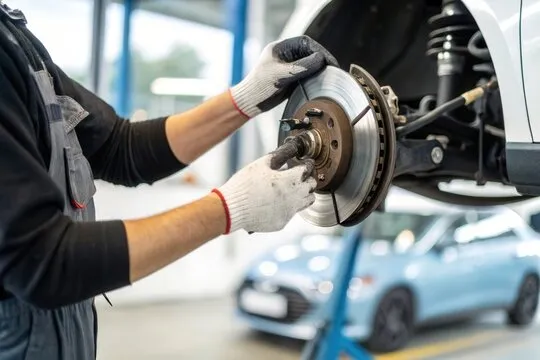
When you visit our Tucson location at 6722 East Tanque Verde Road, our ASE-certified mechanics perform a complete brake system inspection that goes far beyond what most shops offer. This isn’t a quick glance at your brake pads—it’s a thorough evaluation of every component that contributes to your vehicle’s stopping power.
Our inspection process includes:
- Brake pad thickness measurement: Using precision tools to measure remaining pad material.
- Rotor condition assessment: Checking for warping, scoring, and minimum thickness specifications.
- Caliper operation testing: Ensuring pistons move freely and seals aren’t leaking.
- Brake fluid analysis: Testing for moisture contamination and proper viscosity.
- Brake line inspection: Looking for cracks, corrosion, or deterioration.
- Hardware evaluation: Checking springs, clips, and anti-rattle components.
- ABS sensor testing: Verifying proper operation of anti-lock brake systems.
- Parking brake functionality: Ensuring emergency brake holds properly.
We measure brake pad thickness at multiple points because uneven wear can indicate caliper problems or suspension issues. Our technicians check rotors not just visually but with precision measuring tools to determine if they meet manufacturer specifications for minimum thickness. Then, we show you exactly what we found, explain your options, and provide a transparent, itemized estimate with no hidden fees or pressure to approve work immediately.
The Brake Services We Provide
Our comprehensive brake services address every aspect of your vehicle’s braking system. We don’t just replace parts—we restore your brake system to optimal performance using proper techniques and quality components.
Brake pad replacement involves more than just swapping old pads for new ones. We use premium pads matched to your vehicle’s specifications and driving style. Whether you need ceramic pads for quiet operation, semi-metallic pads for performance, or organic pads for everyday driving, we select the right material for your needs.
Rotor resurfacing and replacement requires careful evaluation and precision work. When rotors show minor wear but still meet thickness specifications, we can resurface them to restore a smooth braking surface. However, when rotors are worn beyond minimum thickness, warped beyond correction, or severely scored, replacement is the only safe option.
Caliper service and replacement is critical for even brake wear and proper stopping power. Calipers contain pistons that press brake pads against rotors, and when these pistons stick or seals leak, braking performance suffers dramatically. We rebuild calipers when possible, replacing seals and boots to restore proper function. When calipers are severely corroded or damaged, we install quality replacement units.
Brake fluid flush is essential for long-term brake system health. Brake fluid absorbs moisture over time, lowering its boiling point and promoting internal corrosion. We replace contaminated fluid with fresh fluid that meets your vehicle manufacturer’s specifications, ensuring consistent pedal feel and maximum stopping power.
Brake line inspection and replacement addresses the arteries of your brake system. Rubber brake lines deteriorate over time, developing cracks and bulges that can lead to sudden failure. Metal lines corrode, especially in areas exposed to road salt and moisture. We inspect every inch of brake line and replace compromised sections with quality components.
ABS system repair requires specialized diagnostic equipment and training. When your anti-lock brake warning light illuminates, it indicates a problem with wheel speed sensors, the ABS module, or related wiring. Our technicians use factory-level diagnostic tools to pinpoint problems and perform repairs that restore full ABS functionality.
Parking brake adjustment ensures your vehicle stays put on Tucson’s hills and inclines. Parking brakes operate independently of your main hydraulic system, using cables to apply rear brakes mechanically. Over time, these cables stretch and adjusters wear, reducing holding power.
Brake hardware service involves the small components that most shops ignore but that significantly impact brake performance. Springs, clips, shims, and anti-rattle hardware all contribute to quiet, smooth brake operation. We replace these components during brake service to ensure your repairs last and perform properly.
Why Our Brake Repairs Last
We focus on details most shops skip—cleaning and lubricating caliper slide pins, replacing corroded hardware, and properly torquing fasteners. These seemingly minor steps make the difference between brake repairs that last years and those that fail prematurely.
Caliper slide pins allow calipers to move freely, ensuring even pad wear on both sides of the rotor. When these pins corrode or dry out, calipers bind, causing uneven wear and reduced braking power. We disassemble, clean, and properly lubricate these components with high-temperature brake grease designed for this specific application.
We bed in new brake pads correctly, following manufacturer procedures to properly mate pad material to rotor surfaces. This process involves a series of controlled stops that gradually heat pads and rotors, transferring a thin layer of pad material to the rotor surface. Proper bedding prevents noise, vibration, and premature wear.
We test your system thoroughly before returning your vehicle, verifying proper pedal feel, straight-line stopping, and absence of noise or vibration. This final quality check ensures you leave our shop with brakes that perform as they should.
Understanding What Your Brakes Are Telling You
Your vehicle communicates brake problems through specific symptoms, each indicating different underlying issues:
- Grinding noise means your brake pads have worn completely through their friction material, allowing metal backing plates to contact rotors directly. Grinding noises demand immediate attention because they indicate your braking power is severely compromised.
- Squealing typically comes from wear indicators—small metal tabs designed to contact rotors when pads reach minimum thickness. While squealing doesn’t indicate immediate danger like grinding does, it means you should schedule service soon.
- Vibration during braking usually indicates warped rotors. This condition reduces braking efficiency and accelerates pad wear, requiring rotor replacement or resurfacing.
- Soft pedal that sinks toward the floor indicates air in brake lines or fluid leaks compromising hydraulic pressure. This condition requires immediate attention because it can lead to complete brake failure.
- Pulling to one side during braking indicates uneven wear or stuck calipers. This can result from a seized caliper, contaminated brake pads, or suspension problems affecting brake operation.
- Burning smell after heavy braking or while driving indicates overheated brakes needing evaluation. A burning smell should never be ignored because it can precede brake fade or failure.
- Brake warning light on your dashboard indicates fluid level issues, parking brake engagement, or system malfunctions detected by your vehicle’s computer.
Ignoring these signs escalates costs and risks. A simple brake pad replacement can turn into extensive repairs if you wait too long. Worse, brake failure can happen suddenly, endangering lives.
Schedule Your Brake Inspection Today
If your brakes are making noise, your pedal feels different, or your warning light is on, don’t wait. Every day you delay increases the risk of more expensive repairs and potential safety hazards. Call Monsoon Automotive at (520) 305-4908 or visit us at 6722 East Tanque Verde Road Tucson, AZ 85715.
Choose Monsoon Automotive for brake repair you can trust. Choose peace of mind knowing your vehicle’s most important safety system has been properly serviced by technicians who care about your safety and satisfaction.