
When Your AC Fails in 110-Degree Heat, Every Mile Feels Like Torture
In Tucson, a functioning air conditioning system is essential for survival. When your AC stops working during the brutal summer months, you’re left sweating, uncomfortable, and unsure which mechanic to trust. Past experiences with chain shops or discount mechanics may have left you skeptical, but automotive climate control problems are fixable when handled by technicians who prioritize solving your problem over maximizing profit.
Driving in Tucson without air conditioning is more than uncomfortable—it’s dangerous. When temperatures soar above 110 degrees, your vehicle’s interior can reach 150 degrees within minutes, impairing concentration, increasing fatigue, and risking heat-related illness. Children and pets are especially vulnerable. Beyond discomfort, a malfunctioning climate control system affects defrosting capabilities, compromising visibility and safety during monsoon season storms.
Understanding Your Vehicle’s Climate Control System
Your car’s air conditioning and heating systems integrate electronic controls with mechanical components to maintain comfortable cabin temperatures. Understanding how these systems work helps you recognize issues and understand necessary repairs.
How Your AC System Works
Your AC operates through a closed-loop refrigeration cycle that removes heat and humidity from cabin air. Key components include:
- Compressor: Pressurizes and circulates refrigerant.
- Condenser: Releases heat absorbed from the cabin.
- Evaporator: Absorbs heat from cabin air, cooling it.
- Expansion valve/orifice tube: Regulates refrigerant flow.
- Receiver-drier/accumulator: Removes moisture and filters contaminants.
Failures in these components or refrigerant leaks can lead to warm or weak airflow. Precise refrigerant levels are critical—too little refrigerant means insufficient cooling, while too much can damage the compressor. Modern vehicles use R-134a or R-1234yf refrigerant, and mixing refrigerant types or using incorrect amounts can cause serious damage.
How Your Heating System Works
Your heating system uses hot engine coolant flowing through a heater core, a small radiator behind your dashboard. Air directed across the heater core warms the cabin. Common issues include low coolant levels, thermostat failures, clogged heater cores, or malfunctioning blend doors.
Common AC and Heating Problems
Recognizing frequent climate control issues early can prevent major expenses:
- Refrigerant leaks: Caused by worn seals, corroded connections, or damaged hoses.
- Compressor failure: Often due to insufficient refrigerant or lack of lubrication.
- Electrical problems: Blown fuses, failed relays, or faulty pressure switches.
- Clogged components: Blocked condensers, restricted expansion valves, or plugged heater cores.
- Blend door actuator failures: Prevent proper temperature control.
Refrigerant leaks are progressive and require repair, not just topping off. Ignoring leaks can lead to compressor damage, turning a simple repair into a costly replacement.
Why Choosing the Right Shop Matters
Selecting the wrong repair shop can lead to wasted money, compounded damage, and unnecessary stress. Improper repairs, like adding refrigerant without addressing leaks, escalate costs and cause recurring problems. At Monsoon Automotive, we prioritize transparency, expertise, and respect for our customers.
What Sets Monsoon Automotive Apart
Our approach includes:
- Honest diagnostics: Using professional-grade equipment to identify exact issues.
- Clear communication: Explaining problems in plain English and showing you the issue.
- Transparent pricing: Written estimates with no surprise charges.
- Quality parts and procedures: Using parts that meet or exceed OEM standards.
- Experience with all makes and models: From luxury vehicles to domestic trucks and imports.
Our technicians receive ongoing training in the latest climate control technologies, including hybrid and electric vehicle systems. We invest in manufacturer-specific diagnostic equipment to ensure proper service for your vehicle.
Our AC and Heating Repair Process
Step 1: Initial Contact and Scheduling
Call us at (520) 305-4908 or schedule online. We’ll ask about your symptoms—warm air, weak airflow, unusual noises, or odors—and schedule a diagnostic appointment. If you’re experiencing a complete system failure during extreme heat, we’ll prioritize urgent appointments.
Step 2: Comprehensive Diagnostics
At our Tucson location, we perform thorough diagnostics, including:
- Visual inspection: Checking for damage, leaks, worn belts, or debris.
- Performance testing: Measuring temperatures and airflow volumes.
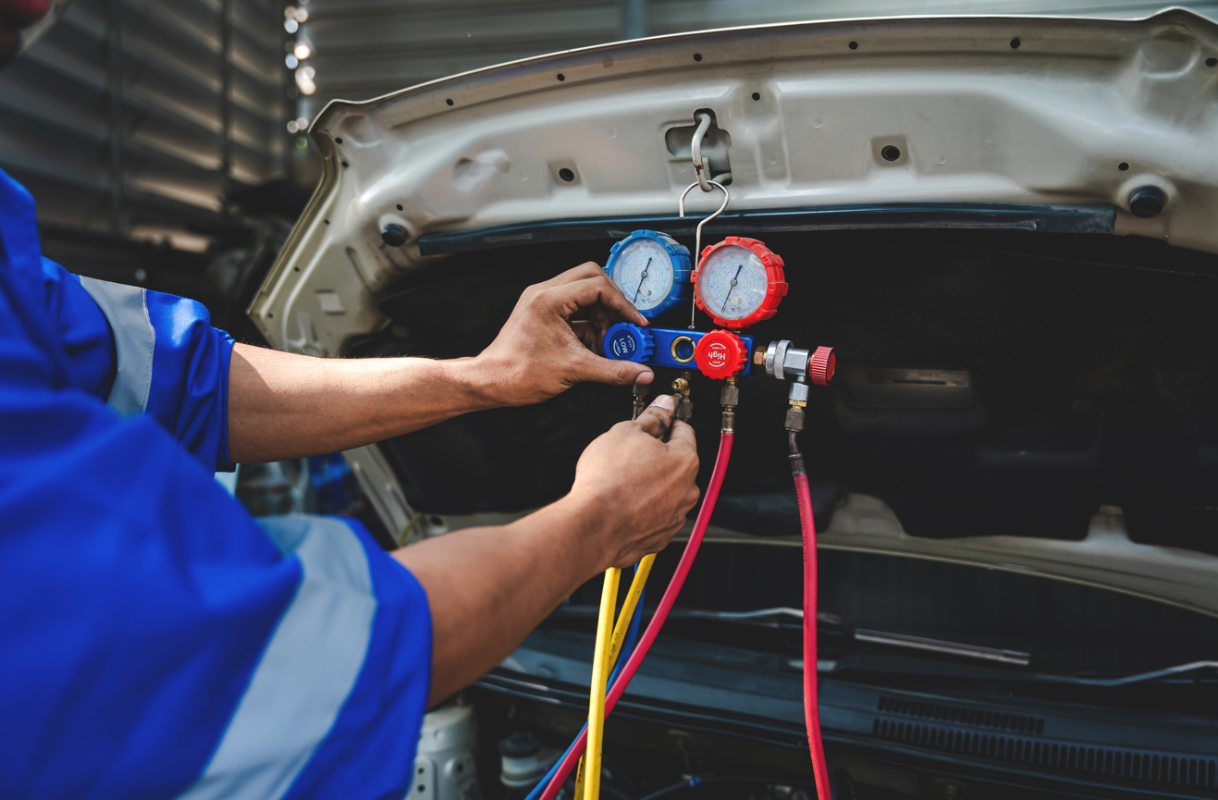
- Pressure testing: Assessing refrigerant levels.
- Leak detection: Using UV dye and specialized equipment.
- Electrical testing: Inspecting fuses, relays, wiring, and control modules.
- Component testing: Evaluating compressor clutch operation, blend door movement, and blower motor performance.
For heating issues, we test coolant flow, thermostat operation, heater core condition, and blend door function. Diagnostics typically take 45 minutes to an hour.
Step 3: Clear Explanation and Estimate
We explain findings in plain English, showing you the problem when possible. Written estimates detail the issue, recommended repair, and necessary steps. We never pressure you into unnecessary repairs or upsell services you don’t need.
Step 4: Professional Repairs
Once approved, we perform repairs using quality parts and proper procedures. For AC systems, this includes evacuating old refrigerant, replacing failed components, vacuum testing, and recharging with the correct refrigerant type and amount. For heating systems, we ensure proper coolant flow, replace failed components, and verify temperature control.
Step 5: Final Testing and Quality Control
We verify repairs with comprehensive testing, including:
- Temperature checks: Confirming cooling or heating performance.
- Leak testing: Ensuring no refrigerant leaks.
- Performance testing: Testing all modes, settings, and fan speeds.
We road test your vehicle when appropriate to ensure proper system performance under real driving conditions.
Step 6: Follow-Up and Support
We provide long-term support after your repair. If you notice any issues, call us at (520) 305-4908. We want to be your long-term automotive partner.
Common Problems We Solve
Weak or Warm Air
Low refrigerant, failed compressors, clogged components, or electrical issues can cause weak or warm airflow. We diagnose and repair the root cause, not just add refrigerant for a temporary fix.
No Heat
Low coolant levels, stuck thermostats, clogged heater cores, or blend door failures can prevent proper heating. We address the underlying issue to restore heat.
Strange Noises
Squealing, grinding, or clicking sounds often indicate worn belts, failing compressor bearings, or refrigerant leaks. Early repairs prevent more expensive damage.
Bad Odors
Musty smells suggest mold growth on the evaporator core, while sweet smells indicate coolant leaks. We eliminate odors by addressing their source.
Intermittent Operation
Electrical issues, failing relays, low refrigerant, or compressor clutch problems can cause intermittent operation. Our systematic approach identifies and resolves these issues.
Why Prompt Repairs Save Money
Delaying repairs can lead to higher costs. Small refrigerant leaks can escalate into compressor failure, requiring a complete system overhaul. Ignoring coolant leaks can cause engine overheating and catastrophic damage. Addressing issues early prevents cascading failures.
Convenient Location in Tucson
Visit us at:
Monsoon Automotive 6722 East Tanque Verde Road Tucson, AZ 85715 (520) 305-4908
We’re located on Tanque Verde Road between Wilmot and Kolb, easily accessible from anywhere in Tucson. Our facility features comfortable waiting areas with complimentary Wi-Fi and beverages, or we can arrange alternative transportation.
Schedule Your Diagnostic Today
Stop putting off your AC or heating repair. Call us at (520) 305-4908 or schedule online. Experience honest diagnostics, clear communication, and quality repairs performed by technicians who care about solving your problem correctly the first time.
Don’t spend another day sweating in traffic or struggling with foggy windows. Contact Monsoon Automotive at 6722 East Tanque Verde Road in Tucson, AZ 85715, or call (520) 305-4908 to schedule your climate control diagnostic today. Drive away with a system that works—and the confidence of finding a shop you can trust for all your automotive needs.