
When Your Dashboard Becomes a Light Show You Can’t Ignore
You’re driving down Tanque Verde Road when your dashboard lights up—check engine light, battery warning, ABS light. Your radio cuts out, and your power windows stop working. You know what’s next: a trip to a mechanic who might confuse you with jargon or hand you an eye-watering estimate.
Maybe you’ve been here before. A shop plugged in a scanner, gave you a vague diagnosis, and charged you for repairs that didn’t fix the problem. Weeks later, the same warning light returned, and the shop stopped answering your calls. Electrical problems can feel like a gamble, but it’s not your fault.
Why Auto Electrical Diagnostics Feel Like a Gamble
Modern vehicles are complex machines with miles of wiring and dozens of sensors. Your car has more computing power than the Apollo spacecraft, and diagnosing electrical issues requires specialized tools, knowledge, and integrity.
Here’s what often happens: A shop plugs in a basic code reader, sees a fault code, and replaces the part it mentions. Sometimes this works, but often it doesn’t. That’s because fault codes don’t tell you what’s broken—they indicate which system detected a problem. Without proper diagnostics, shops are guessing, and you’re paying for those guesses.
This lack of expertise and transparency leaves you vulnerable. You don’t know enough to verify what you’re told, and if the mechanic lacks skill or honesty, you’re left with anxiety, wasted money, and unresolved issues. The electrical systems in today’s vehicles communicate with each other through complex networks. When one component fails, it can trigger fault codes in multiple systems, creating a confusing web of symptoms that only experienced technicians can unravel.
What Professional Auto Electrical Diagnostics Look Like
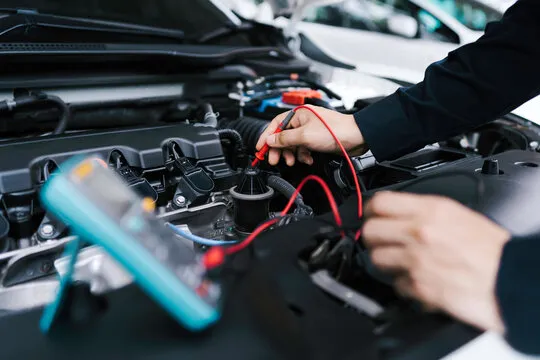
Real diagnostics start with questions: When did the problem begin? Is it constant or intermittent? Have there been recent repairs? These details guide the process. Next, professional-grade tools come into play—manufacturer-specific scanners, multimeters, oscilloscopes, and more.
A skilled technician doesn’t just read a code and replace a part. They verify the code, check related systems, test voltage and ground connections, and trace circuits to pinpoint the issue. After repairs, they perform verification testing to ensure the problem is resolved. This thorough approach separates professionals from shops that “throw parts” at problems.
Professional electrical diagnostics involve understanding how different systems interact. Your vehicle’s computer modules constantly communicate with each other, sharing data about engine performance, transmission operation, braking systems, and more. This systematic approach saves you time and money by eliminating unnecessary repairs and focusing on the actual issue affecting your vehicle’s performance.
Common Auto Electrical Problems We Diagnose and Repair
Battery and Charging System Failures
If your car won’t start or the battery keeps dying, the issue might not be the battery or alternator. It could be:
- Parasitic battery drain
- Corroded connections
- Failing voltage regulator
- Damaged wiring
We test the entire system to find the root cause, not just the symptoms. Battery and charging system problems are among the most common electrical issues vehicle owners face, yet they’re often misdiagnosed. A battery that repeatedly dies might seem like a simple battery replacement, but the real culprit could be a parasitic drain—a component that continues drawing power even when the vehicle is off.
Corroded connections are another frequent problem in Tucson’s climate. The combination of heat, dust, and occasional moisture creates the perfect environment for corrosion to develop on battery terminals and cable connections. This corrosion increases resistance in the circuit, preventing proper charging and starting.
The alternator’s voltage regulator controls how much electricity is generated and fed back into the battery. When this component fails, it can overcharge or undercharge the battery, leading to premature battery failure or a vehicle that won’t start.
Starting System Diagnostics
When your engine won’t crank, the problem could involve:
- Corroded cables
- Failing starter solenoid
- Faulty ignition switch
- Weak battery
We systematically test each component to ensure accurate diagnosis. Starting system problems can be frustrating because they often occur without warning, leaving you stranded at the worst possible moment.
Corroded cables create high resistance that prevents sufficient current from reaching the starter motor. Even if the battery is fully charged, corroded cables can make it seem like the battery is dead.
The starter solenoid acts as a high-current switch, engaging the starter motor when you turn the key. When solenoids fail, you might hear a clicking sound but no cranking, or you might experience intermittent starting problems.
Ignition switch problems can create confusing symptoms because the switch controls multiple circuits. A failing ignition switch might prevent starting, cause the vehicle to stall while driving, or create intermittent electrical problems throughout the vehicle.
Warning Light Diagnosis
A check engine or ABS light can signal anything from a minor sensor issue to a major safety problem. We differentiate between:
- Failed sensors vs. wiring issues
- Actual malfunctions vs. false warnings
- Safety-critical vs. minor issues
We retrieve fault codes, test circuits, and explain what needs fixing. Warning lights are your vehicle’s way of communicating problems, but interpreting these messages requires expertise.
Lighting System Problems
Flickering or non-functional lights often indicate:
- Corroded grounds
- Failing control modules
- Damaged wiring
We trace circuits and repair the underlying issue. Modern vehicle lighting systems are more complex than ever, with computer-controlled modules managing everything from headlight brightness to turn signal timing.
Corroded ground connections are a common cause of lighting problems, especially in Tucson’s harsh climate. Ground connections provide the return path for electrical current, and when they corrode, lights may flicker, operate dimly, or fail completely.
Computer Module Failures
Modern vehicles rely on electronic control modules. Diagnosing failures requires:
- Manufacturer-specific software
- Understanding of communication networks
- Knowledge of programming procedures
We accurately diagnose and repair or replace modules as needed. Computer modules are the brains of modern vehicles, controlling everything from engine management to climate control.
Why Specialized Auto Electrical Knowledge Matters
Every manufacturer designs electrical systems differently. European vehicles like BMW and Audi use complex wiring and proprietary protocols. Japanese brands like Toyota and Honda have unique architectures, while domestic vehicles like Ford and Chevrolet use entirely different systems. Diesel vehicles add another layer of complexity.
A shop specializing in electrical services invests in the tools, training, and technical information needed to diagnose and repair all makes and models. Guesswork doesn’t work with electrical problems—accurate diagnosis is essential to avoid unnecessary costs and delays.
What Sets Monsoon Automotive Apart
Transparent Communication
We explain what’s wrong, why it’s wrong, and what it will cost—no jargon, no surprises. If additional issues arise, we contact you immediately with clear explanations and updated estimates. You’ll never face unexpected charges or feel pressured into repairs.
Root Cause Repairs
We don’t just replace failed parts; we investigate why they failed. For example, if an alternator burns out, we check for excessive loads or wiring issues. This approach prevents repeat failures and saves you money.
Convenient Service
We respect your time with:
- Flexible scheduling
- Accurate time estimates
- Shuttle service within Tucson
- After-hours drop-off and pickup
Complete Auto Electrical Services for All Makes and Models
We diagnose and repair issues in battery systems, starting systems, warning lights, lighting circuits, computer modules, and more. We service:
- European Vehicles: BMW, Audi, Mercedes-Benz, Volkswagen, and more
- Japanese Vehicles: Toyota, Honda, Nissan, Subaru, and others
- Domestic Vehicles: Ford, Chevrolet, Dodge, Jeep, and more
- Diesel Vehicles: Cummins, Duramax, Power Stroke, and others
Our technicians use advanced diagnostic tools and receive ongoing training to stay current with evolving technology. We don’t guess—we diagnose and repair correctly.
The Peace of Mind You Deserve
Imagine this: Your check engine light comes on. You call a trusted shop, schedule an appointment, and receive a loaner vehicle or shuttle service. The shop performs thorough diagnostics, explains the issue clearly, and completes the repair using quality parts. When you pick up your car, it’s fixed right the first time, and you understand exactly what was done.
This isn’t a fantasy—it’s what we deliver at Monsoon Automotive. You deserve a shop that communicates clearly, charges fairly, and fixes your vehicle correctly.
Stop Living With Electrical Problems
That warning light won’t turn off on its own. The longer you wait, the more likely a minor issue becomes a major failure. You can continue living with the anxiety and uncertainty, or you can take the first step toward peace of mind.
Contact Monsoon Automotive today to schedule your diagnostic appointment. Call us at (520) 305-4908 or visit us at 6722 East Tanque Verde Road, Tucson, AZ 85715. Let us earn your trust with transparent communication, quality work, and honest service.
Monsoon Automotive. Where Quality Reigns.
How long does electrical diagnostic testing take?
Diagnostic time varies depending on the complexity of the problem. Simple issues like a failed sensor might be diagnosed in under an hour, while intermittent problems or complex electrical faults may require several hours of testing.
Can electrical problems damage other parts of my vehicle?
Yes, electrical problems can cause cascading failures if left unaddressed. For example, a failing alternator can damage the battery, and a short circuit can damage computer modules or other electrical components.
Why do electrical problems sometimes come and go?
Intermittent electrical problems are often caused by loose connections, damaged wiring that makes contact only under certain conditions, or components that fail when hot or cold.
Do you work on hybrid and electric vehicles?
Yes, we service hybrid and electric vehicles. These vehicles have high-voltage electrical systems that require specialized training and equipment to diagnose and repair safely.
What should I do if my check engine light comes on?
If your check engine light comes on, schedule a diagnostic appointment as soon as possible. While some check engine lights indicate minor issues, others signal serious problems that can cause engine damage if ignored.
How can I prevent electrical problems?
Regular maintenance helps prevent electrical problems. Keep battery terminals clean, have the charging system tested annually, and address warning lights promptly.
What causes battery drain when the vehicle is off?
Parasitic battery drain occurs when a component continues drawing power after the vehicle is turned off. Common causes include interior lights that don’t turn off, faulty door switches, or control modules that don’t enter sleep mode.
Can you repair damaged wiring?
Yes, we repair damaged wiring using proper techniques and materials. Wiring repairs must be done correctly to prevent future problems.
For expert auto electrical diagnostics and repair in Tucson, contact Monsoon Automotive at (520) 305-4908. Visit us at 6722 East Tanque Verde Road, Tucson, AZ 85715 for professional service you can trust.