
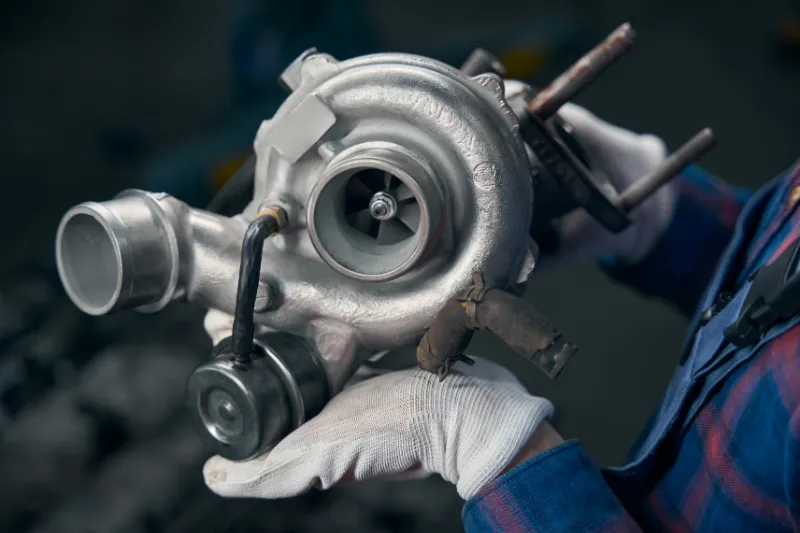
When Your Turbo Fails, Trust Matters
You’re driving through Tucson, and something feels off—sluggish acceleration, a high-pitched whine, or blue smoke trailing behind you. Your check engine light glows, and questions flood your mind: How much will this cost? Can you trust the mechanic? At Monsoon Automotive, we understand turbocharger issues create stress and uncertainty. Your turbocharger is a precision component that boosts power and fuel efficiency. When it fails, you need honest, expert service to restore your vehicle’s performance. We’ve built our reputation in Tucson on transparency and technical expertise, treating every turbo repair with the care it deserves.
Why Turbochargers Fail
Turbochargers operate under extreme conditions, spinning up to 150,000 RPM and enduring temperatures over 1,000°F. Failures often stem from identifiable causes:
- Oil contamination from delayed oil changes or incorrect oil grades
- Oil starvation due to clogged passages or low oil levels
- Foreign object damage from debris entering the intake system
- Excessive heat from engine modifications or improper cool-downs
- Carbon buildup restricting airflow and overworking the turbo
- Bearing failure from wear or contaminated oil
- Wastegate or boost control issues causing the turbo to operate outside its design
Oil contamination is a common culprit. Delayed oil changes or incorrect oil grades prevent the delicate bearings inside your turbocharger from receiving adequate lubrication, leading to wear and eventual failure. Similarly, oil starvation occurs when the turbo doesn’t receive sufficient oil flow due to clogged passages or low oil levels, causing rapid bearing destruction.
Foreign object damage happens when debris enters the intake or exhaust side of the turbocharger, damaging the compressor or turbine wheels. Excessive heat, especially in Tucson’s desert climate, accelerates wear and can cause premature failure of seals and bearings. Carbon buildup restricts airflow, forcing the turbo to work harder, while wastegate and boost control issues prevent proper regulation of boost pressure, leading to overboost or underboost conditions.
Warning Signs of Turbocharger Problems
Recognizing early symptoms can prevent catastrophic engine damage. Watch for:
- Check engine light with codes related to boost pressure
- Loss of power, especially during acceleration
- High-pitched whining or grinding noises
- Blue or gray smoke from the exhaust
- Black smoke indicating a rich air-fuel mixture
- Excessive oil consumption or burning oil smells
- Reduced fuel economy or turbo lag
- Rattling sounds on startup or shutdown
Loss of power is one of the most noticeable symptoms, especially during acceleration or climbing hills. High-pitched whining or grinding noises often indicate bearing wear or shaft imbalance. Blue or gray smoke signals oil entering the combustion chamber through failed turbo seals, while black smoke suggests an overly rich air-fuel mixture. Excessive oil consumption, reduced fuel economy, and turbo lag are also common signs of turbo problems. Ignoring these symptoms can escalate a manageable repair into extensive engine damage.
Why Turbo Repairs Can Be Confusing
The turbocharger repair industry lacks standardization, leaving vehicle owners confused. Different shops offer varying diagnostic approaches and repair recommendations. Some may misdiagnose issues or push unnecessary repairs, while others suggest the cheapest solution without addressing underlying problems. At Monsoon Automotive, we eliminate the guesswork with transparency and education. We provide clear diagnostics, honest recommendations, and detailed explanations so you can make informed decisions.
Our Turbocharger Diagnostic Process
At our Tucson location, we start with a thorough diagnostic process using advanced tools and hands-on inspections. Our process includes:
- Computer diagnostics to read manufacturer-specific codes
- Visual inspection for oil leaks or damage
- Physical inspection of turbine and compressor wheels
- Boost pressure testing to verify proper operation
- Oil quality analysis for contamination
- Intake and exhaust system inspections for restrictions
- Wastegate and boost control testing
- Comprehensive engine health assessment
Accurate diagnosis forms the foundation of effective turbocharger repair. We use professional-grade scan tools to retrieve diagnostic trouble codes and analyze real-time turbocharger performance. Visual and physical inspections reveal issues like oil leaks, damaged components, or bearing wear. Boost pressure testing identifies wastegate problems or turbo inefficiencies, while oil quality analysis ensures proper lubrication. Intake and exhaust system inspections detect restrictions, and wastegate testing verifies proper boost regulation. We document our findings and explain the problem in plain English, ensuring you understand exactly what’s wrong and how to fix it.
Repair vs. Replacement: Honest Recommendations
Not all turbo issues require replacement. Common problems like failed wastegate actuators or boost control solenoids can often be resolved without replacing the entire turbo. When replacement is necessary, we discuss your options:
- OEM turbos offer perfect fitment and original performance but at a premium price
- Aftermarket turbos provide reliable performance at lower costs
- Remanufactured turbos offer a balance of quality and affordability
We explain the pros and cons of each option, including expected longevity, so you can choose what’s best for your budget and vehicle. Our goal is to provide you with enough information to make a confident decision, not to pressure you into the most expensive option.
Expert Turbocharger Replacement
Proper turbo replacement involves more than swapping parts. We address the root cause of failure to prevent future issues. Our process includes:
- Complete oil system flush to remove contamination
- Inspection and replacement of oil feed and return lines
- Cleaning intake and exhaust systems
- Replacing gaskets, seals, and hardware with OEM-quality components
- Pre-lubricating the turbo to prevent dry-start damage
- Verifying boost pressure and reprogramming the computer system if needed
- Comprehensive test drive to ensure proper operation
Installing a new turbo without addressing the underlying cause of failure sets the stage for repeat problems. We ensure your new turbo operates in a clean, properly functioning system, protecting your investment and restoring your vehicle’s performance.
Preventing Future Turbo Problems
Proper maintenance is key to turbo longevity. Follow these tips:
- Use the exact oil grade specified by your manufacturer
- Change oil regularly, especially in Tucson’s extreme climate
- Allow brief warm-up and cool-down periods to protect the turbo
- Address check engine lights promptly to prevent minor issues from escalating
We’ll help you establish a maintenance schedule tailored to your driving conditions, ensuring your turbocharger provides years of reliable performance.
Transparent Pricing and Communication
We provide detailed written estimates that break down parts and labor costs. You’ll know exactly what you’re paying for and why. We never start work without your approval, and if additional issues arise, we contact you immediately for authorization. No surprises, no upsells—just honest service.
Schedule Your Turbo Diagnostic Today
Don’t let a failing turbocharger jeopardize your vehicle or your wallet. Call Monsoon Automotive at (520) 305-4908 or visit us at 6722 East Tanque Verde Road, Tucson, AZ 85715. We’ll diagnose the issue, explain your options, and restore your vehicle’s performance with expert care.
Monsoon Automotive 6722 East Tanque Verde Road Tucson, AZ 85715 (520) 305-4908 service@monsoonauto.com