
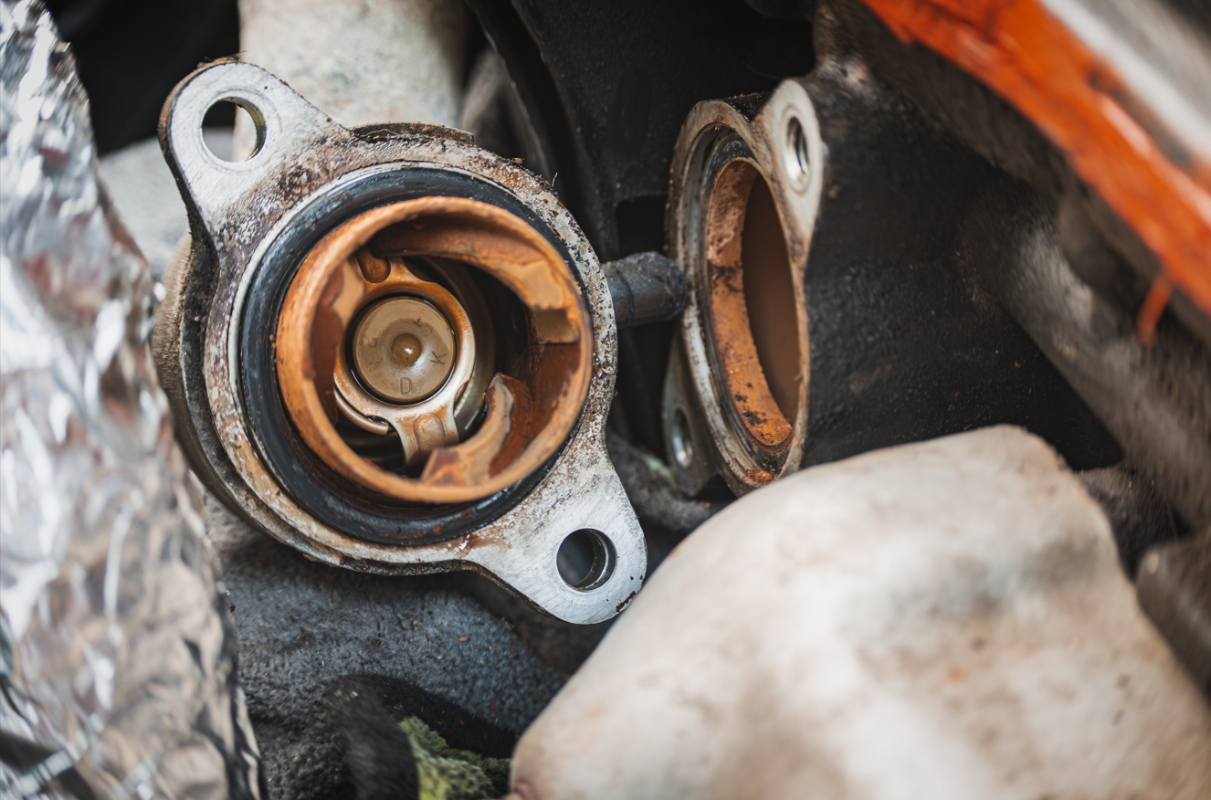
Is Your Engine Overheating? Don’t Ignore the Warning Signs
Driving through Tucson, you notice your temperature gauge climbing, the engine warning light on, or steam rising from under the hood. These aren’t minor concerns. Ignoring thermostat issues can lead to catastrophic engine failure, especially in Tucson’s extreme heat, where cooling systems work overtime to protect engines from temperatures exceeding 100 degrees.
Thermostat problems are more than mechanical nuisances—they’re financial threats. Misdiagnosis or neglect can escalate a simple repair into a costly engine replacement. Understanding how your thermostat works and recognizing warning signs can save you from financial and mechanical disaster.
Why Your Thermostat Matters
Your engine’s thermostat regulates coolant flow to maintain an optimal temperature between 195 and 220 degrees Fahrenheit. A stuck-closed thermostat causes overheating, warping cylinder heads and blowing gaskets. A stuck-open thermostat prevents the engine from reaching proper temperature, leading to poor fuel economy, increased emissions, and long-term wear.
The thermostat acts as the gatekeeper of your cooling system. When the engine is cold, it stays closed, allowing the engine to warm up quickly. Once optimal temperature is reached, it opens, letting coolant flow to the radiator for cooling. This precise regulation ensures efficient combustion, proper lubrication, and minimal emissions. A malfunctioning thermostat disrupts this balance, causing severe damage.
Overheating from a stuck-closed thermostat can warp aluminum cylinder heads, blow head gaskets, and even crack engine blocks. Conversely, a stuck-open thermostat causes incomplete combustion, poor fuel economy, and increased engine wear. In Tucson’s climate, a functioning thermostat is essential for your vehicle’s survival.
Warning Signs of a Failing Thermostat
Recognizing these symptoms early can save you from costly repairs:
- Temperature gauge fluctuations: Erratic gauge behavior indicates thermostat failure.
- Engine running hotter or cooler than normal: Overheating suggests a stuck-closed thermostat, while running too cool points to a stuck-open one.
- Check engine light: Codes like P0128 or P0217 signal temperature irregularities.
- Poor heater performance: Lukewarm air from your heater often points to a stuck-open thermostat.
- Coolant leaks or steam: Leaks around the thermostat housing or steam from the engine compartment are red flags.
Temperature gauge fluctuations are often the first sign of trouble. Overheating indicates a stuck-closed thermostat, while an engine running too cool suggests a stuck-open one. Poor heater performance and visible coolant leaks are additional warning signs. Ignoring these symptoms risks escalating damage and higher repair costs.
Why Thermostat Problems Are Often Misdiagnosed
Many shops misdiagnose thermostat issues due to inadequate diagnostic procedures or inexperience. Overheating is often blamed on the radiator or water pump, leading to unnecessary repairs. Proper diagnosis requires specialized tools like infrared thermometers and scan tools to measure coolant temperatures and verify thermostat function.
Cooling system problems often occur in combination. A failing thermostat might coexist with a weak radiator cap or aging coolant. Inexperienced technicians may replace parts unnecessarily, leaving the real issue unaddressed. Choosing a shop with the right equipment and expertise is crucial for accurate, cost-effective repairs.
How Monsoon Automotive Protects Your Investment
At Monsoon Automotive, we follow a thorough diagnostic process to ensure accurate identification and repair of thermostat issues:
- Comprehensive cooling system inspection: We examine the radiator, water pump, hoses, and more to identify contributing issues.
- Professional diagnostic testing: Using infrared thermometers and scan tools, we measure coolant temperatures and verify thermostat function.
- Pressure testing: We check for leaks that could mimic thermostat failure.
- Honest assessment: We explain our findings clearly and prioritize repairs based on urgency.
- Quality parts and installation: We use thermostats that meet or exceed OEM standards and follow proper procedures for reliable operation.
- Post-repair verification: We test your vehicle through multiple heat cycles to confirm the repair solved the problem.
Our process begins with a comprehensive cooling system inspection, checking coolant condition, hoses, the radiator, and the water pump. We use professional diagnostic tools to measure temperatures and verify thermostat function. Pressure testing ensures no leaks are present, and our honest assessments help you make informed decisions.
We use high-quality thermostats designed for your vehicle, ensuring precise temperature regulation. Post-repair verification includes multiple heat cycles and road tests to confirm proper operation. This thorough approach ensures reliable, long-term results.
What’s Included in Our Thermostat Service
When you choose Monsoon Automotive, you receive:
- Complete cooling system evaluation: We inspect coolant condition, hoses, the radiator, and the water pump.
- Thermostat replacement with quality components: We use thermostats designed specifically for your vehicle.
- Cooling system flush and fill: If needed, we remove contaminated coolant and replace it with the correct type for Tucson’s climate.
- Pressure testing and road testing: We verify leak-free operation and proper temperature regulation under real-world conditions.
Our evaluation goes beyond the thermostat, assessing the entire cooling system. We use high-quality parts and perform thorough testing to ensure your vehicle operates reliably in Tucson’s demanding climate.
Why Tucson Drivers Trust Monsoon Automotive
At Monsoon Automotive, we’ve built our reputation on honesty, expertise, and exceptional service:
- Specialized experience: We service all makes and models, including European, Japanese, domestic, and diesel vehicles.
- Transparent communication: We explain issues in plain language and provide photo documentation of our findings.
- Fair pricing: We charge reasonable rates and never perform additional repairs without your approval.
- Customer-focused service: We respect your time, offer convenient appointments, and prioritize repairs based on your budget and needs.
- Local roots: As a locally owned business, we’re committed to serving our Tucson community with integrity.
Our specialized experience ensures accurate diagnoses and repairs for all vehicle types. Transparent communication and fair pricing build trust, while our customer-focused approach prioritizes your needs. As a locally owned business, we’re dedicated to serving Tucson with honesty and integrity.
The Cost of Ignoring Thermostat Problems
Delaying thermostat repairs can lead to:
- Catastrophic engine damage: Overheating can warp cylinder heads, blow gaskets, or crack engine blocks.
- Breakdowns: A failed thermostat can leave you stranded in extreme heat.
- Progressive engine wear: A stuck-open thermostat causes incomplete combustion and accelerates engine wear.
- Unplanned vehicle replacement: Severe damage may force you into buying a new car prematurely.
Ignoring thermostat problems risks catastrophic engine damage, costly breakdowns, and accelerated wear. Addressing issues promptly protects your vehicle and finances.
How long does thermostat replacement take? Most replacements take 1″“3 hours, depending on your vehicle’s make and model.
Can I drive with a bad thermostat? Driving with a stuck-open thermostat causes long-term damage, while a stuck-closed thermostat risks immediate overheating. Prompt diagnosis is essential.
How often should thermostats be replaced? Thermostats typically last 50,000″“100,000 miles but should be replaced when they fail or during other cooling system work.
Will a new thermostat improve fuel economy? Yes, if your old thermostat was stuck open. A functioning thermostat ensures efficient combustion and can improve fuel economy by 10″“20 percent.
What’s the difference between cheap and quality thermostats? Quality thermostats use better materials and precise manufacturing, ensuring reliable operation. Cheap thermostats often fail prematurely.
Why does my temperature gauge fluctuate? Fluctuations usually indicate a sticking thermostat but can also result from low coolant levels or a failing temperature sensor.
Can a thermostat cause my check engine light to come on? Yes, modern vehicles monitor engine temperature closely. Codes like P0128 or P0217 often indicate thermostat issues.
What happens if I ignore a thermostat problem? Ignoring a stuck-closed thermostat can cause catastrophic engine damage, while a stuck-open thermostat leads to progressive wear and poor performance.
Schedule Your Thermostat Diagnosis Today
Don’t let a failing thermostat jeopardize your engine or finances. Monsoon Automotive provides honest, professional service to diagnose and repair thermostat issues correctly the first time. Visit us at 6722 East Tanque Verde Road Tucson, AZ 85715, or call (520) 305-4908 to schedule your appointment. You can also email us at Service@MonsoonAuto.com.
Stop worrying about overheating and costly repairs. Contact Monsoon Automotive today and experience the peace of mind that comes with expert care.