
Your Car Shouldn’t Make You Hold Your Breath Every Morning
You turn the key, and nothing happens—or maybe the engine cranks endlessly, struggling to turn over. That sinking feeling when your car is hard to start isn’t just frustrating; it’s a warning sign that something’s wrong. Ignoring it could leave you stranded at the worst possible moment.
If you’re experiencing hard starting issues in Tucson or the surrounding areas, you’re not alone. Many drivers face this problem daily, often frustrated by shops that misdiagnose the issue or charge for unnecessary repairs. At Monsoon Automotive, we provide honest answers, transparent pricing, and repairs that solve the problem—not temporary fixes.
A hard-starting vehicle creates stress and uncertainty in your daily routine. You might leave earlier for work to account for potential starting problems or avoid turning off your engine during errands for fear it won’t restart. When your car struggles to start, it’s communicating that one or more systems aren’t functioning properly, and these issues rarely resolve themselves without professional intervention.
Why Your Car Is Hard to Start in Tucson, AZ
A hard-starting vehicle can stem from dozens of potential issues. Unfortunately, many shops rely on guesswork, replacing parts until something works. At Monsoon Automotive, we use advanced diagnostic equipment to pinpoint the exact cause.
Modern vehicles depend on precise coordination between electrical, fuel, and ignition systems, all controlled by sophisticated computer modules. When any component in these systems begins to fail, starting problems emerge. The challenge lies in identifying which specific component has failed, as symptoms often overlap between different issues.
Common Causes of Hard Starting Issues
**Battery and Electrical System Problems**
- Weak or failing battery
- Corroded battery terminals
- Failing alternator
- Damaged or loose battery cables
- Parasitic electrical drain
Tucson’s extreme heat accelerates battery wear, making weak batteries the most common culprit. If your car cranks slowly or clicks when you turn the key, your battery may be struggling. Corroded terminals create resistance that prevents full electrical flow, even when the battery itself is healthy. The alternator plays an equally critical role by recharging the battery while the engine runs. A failing alternator gradually drains the battery, leading to progressively harder starts until the battery is completely depleted.
**Fuel System Issues**
- Failing fuel pump
- Clogged fuel filter
- Dirty or malfunctioning fuel injectors
- Fuel pressure regulator problems
- Contaminated fuel
Your engine needs the right fuel pressure to start. A failing fuel pump often causes hard starts after sitting for hours or when the engine is hot. Fuel filters trap contaminants before they reach the engine, but over time they become clogged, restricting fuel flow. Insufficient fuel flow means the engine receives inadequate fuel during cranking, leading to extended cranking times or failure to start.
**Ignition System Failures**
- Worn spark plugs
- Failing ignition coils
- Damaged spark plug wires
- Faulty crankshaft or camshaft position sensors
- Ignition switch problems
The ignition system creates the spark needed for combustion. Worn components can cause extended cranking, rough idle, or complete failure to start. Spark plugs gradually wear down over thousands of miles, requiring higher voltage to fire. Ignition coils transform battery voltage into the thousands of volts needed to jump the spark plug gap. Position sensors tell the engine computer exactly when to fire each spark plug, and sensor failures create timing problems that prevent starting.
**Starter Motor and Related Components**
- Worn starter motor
- Damaged starter solenoid
- Faulty neutral safety switch
- Worn flywheel teeth
- Bad starter relay or fuse
Grinding noises, clicking sounds, or slow cranking often point to starter system issues. Starter motors contain brushes, bearings, and armatures that wear over time. The starter solenoid acts as a heavy-duty switch, engaging the starter gear with the flywheel while simultaneously connecting battery power to the starter motor.
**Engine Mechanical and Sensor Issues**
- Low engine compression
- Timing belt or chain problems
- Faulty mass airflow sensor
- Malfunctioning throttle position sensor
- Clogged air filter
Modern engines rely on sensors to adjust the fuel-air mixture for starting. Faulty sensors can lead to hard starts or extended cranking. Engine compression must be sufficient to ignite the fuel-air mixture. Timing components ensure that valves open and close at precisely the right moments. Even something as simple as a severely clogged air filter can restrict airflow enough to prevent proper starting.
**Weather and Temperature Factors**
- Cold start issues
- Heat soak problems
- Vapor lock in fuel lines
- Moisture in electrical components
Tucson’s extreme temperatures can cause unique challenges, like vapor lock during summer or moisture-related issues during monsoon season. Temperature extremes stress every system in your vehicle, often revealing marginal components that might work adequately in moderate conditions.
The Cost of Ignoring Hard Starting Problems in Tucson, AZ
Delaying repairs can lead to serious consequences that extend far beyond the inconvenience of a car that’s difficult to start.
**Worsening problems:** A weak battery or failing fuel pump will eventually leave you stranded. Components rarely fail suddenly without warning—they deteriorate gradually, providing increasing symptoms until complete failure occurs.
**Additional damage:** Extended cranking wears out the starter motor, while a failing alternator shortens battery life. One failing component often damages related components, multiplying your repair costs.
**Safety risks:** Hard starting often leads to complete failure in traffic, dangerous areas, or extreme weather. Imagine your car failing to restart after stopping for gas late at night, or dying in an intersection during rush hour traffic.
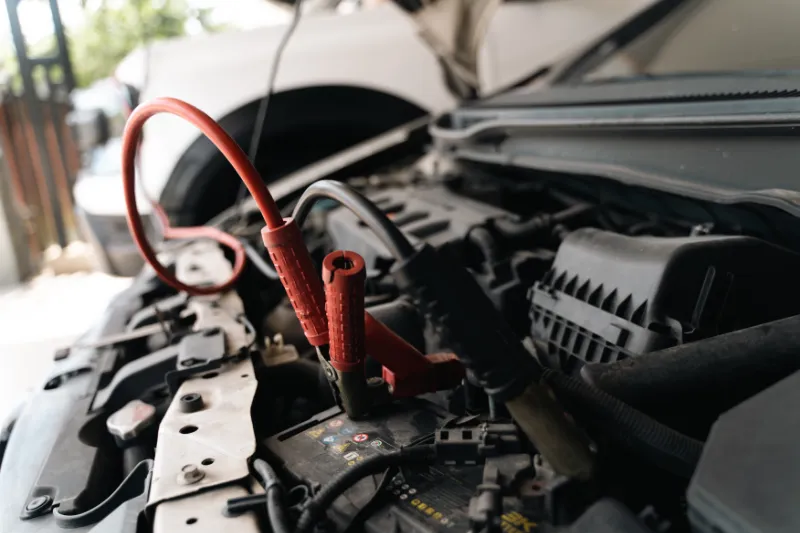
**Wasted time and money:** Temporary fixes like jump-starting only delay the inevitable. Every time you jump-start your vehicle or wait through extended cranking, you’re investing time without addressing the underlying problem.
How Monsoon Automotive Solves Hard Starting Problems in Tucson, AZ
Comprehensive Diagnostics
We don’t guess or replace parts hoping for a fix. Our ASE-certified technicians use advanced diagnostic equipment to systematically test every component of your starting system—battery, alternator, starter, fuel pressure, ignition system, and engine sensors.
Our diagnostic approach follows a logical sequence that eliminates guesswork. We start with a complete battery and charging system test, measuring cranking amps, voltage drop, and charging output under load. Next, we test fuel system pressure and volume, inspect filters, and check for contamination. We perform ignition system testing, analyzing spark plug condition, coil output, and sensor functionality. Finally, we retrieve and analyze diagnostic trouble codes, confirming the actual failure before recommending repairs.
Transparent Communication
We explain our findings in plain English, show you the failed components, and provide detailed written estimates. You’ll understand exactly what you’re paying for, with no surprise charges or pressure tactics. We text updates throughout the day, keeping you informed every step of the way.
Repairs That Fix the Problem
Once we identify the root cause, we perform repairs using quality parts. We test-start your vehicle multiple times under various conditions to ensure the problem is resolved. If your car was hard to start when hot, we let it reach operating temperature, shut it off, and verify it restarts properly. If problems occurred after sitting overnight, we may keep your vehicle to verify a cold start the next morning.
Building Trust Through Honest Service
We’ve seen customers frustrated by shops that misdiagnosed their hard starting issues or oversold unnecessary repairs. At Monsoon Automotive, we focus on earning your trust through transparency, honesty, and results. We only recommend repairs that are truly necessary, and our reputation in Tucson is built on solving problems correctly the first time.
What to Expect When You Choose Monsoon Automotive in Tucson, AZ
- **Contact us:** Call (520) 305-4908 to schedule an appointment or describe your symptoms.
- **Discuss your concerns:** When you arrive, we’ll ask detailed questions about your vehicle’s symptoms.
- **Comprehensive diagnostics:** Our process typically takes 1–2 hours, systematically testing all potential causes.
- **Transparent communication:** We explain our findings, show you the failed components, and provide a detailed written estimate.
- **Expert repairs:** If you approve the repairs, we complete the work using quality parts and keep you updated throughout the process.
- **Review and recommendations:** When you pick up your vehicle, we explain the repairs and provide preventive maintenance tips.
Stop Living with the Stress of an Unreliable Vehicle
Every morning you spend wondering if your car will start is unnecessary stress. Hard starting issues don’t fix themselves—they worsen until complete failure occurs. You deserve a vehicle that starts reliably every time and honest answers from automotive professionals.
At Monsoon Automotive, we’ve helped hundreds of Tucson drivers solve their hard starting problems permanently. Our systematic diagnostic approach identifies the actual problem, and our quality repairs solve it correctly the first time. Call us today at (520) 305-4908 or visit us at 6722 East Tanque Verde Road Tucson, AZ 85715. Let us diagnose and fix your hard starting problem the right way. You’ll rediscover the confidence that comes from driving a reliable vehicle.