
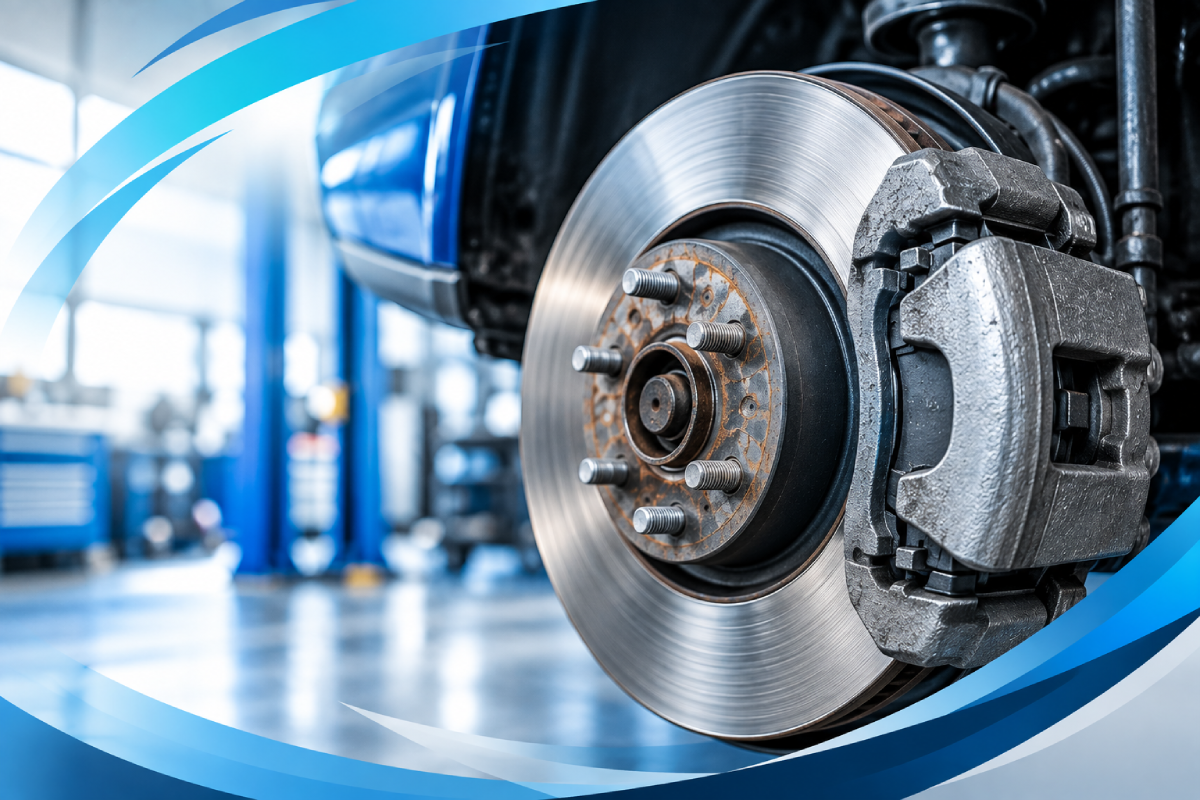
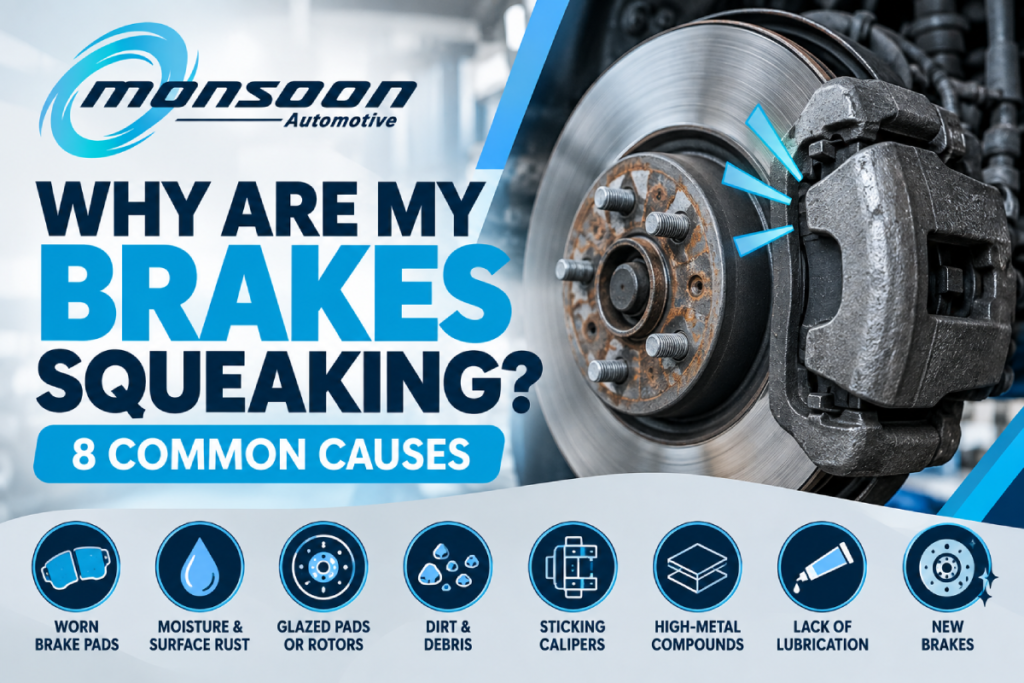
If you’re wondering why your brakes are squeaking, the noise often comes from vibrations between the brake pads, rotors, and calipers.
Here are 8 common causes Tucson, Arizona drivers should know.
1. Worn Brake Pads
Brake pads gradually wear down every time you stop. Many pads have a metal wear indicator designed to contact the rotor and create a high-pitched squeal when the friction material gets low.
If your car’s brakes are squeaking consistently, especially every time you press the pedal, worn pads should be checked. Waiting too long may allow the pad material to wear away completely, potentially damaging the rotors and increasing repair costs.
A brake repair specialist can measure the remaining pad material and inspect the rotor surface to determine whether replacement is necessary.
2. Moisture and Surface Rust
A light layer of rust can develop on brake rotors after rain, washing your vehicle, or leaving it parked overnight. This can create temporary brake noise during your first few stops.
This type of squeaking often disappears once braking removes the surface rust. However, persistent rust or corrosion deserves professional attention.
3. Glazed Brake Pads or Rotors
Excessive heat can make brake pad material or rotor surfaces smooth and hardened, a condition commonly called glazing. Instead of creating normal friction, glazed surfaces can produce squealing and may affect braking performance.
Heat buildup can occur after repeated hard braking, riding the brakes down a grade, or other demanding driving conditions. Tucson, Arizona drivers also deal with high ambient temperatures, making proper brake inspections an important part of automotive maintenance service.
4. Dirt and Debris
Small stones, sand, road grit, and other debris can sometimes become trapped around brake components. When the material contacts a moving rotor, you may hear squeaking, scraping, or another unfamiliar sound.
If the noise doesn’t disappear, don’t assume the debris will eventually work itself loose. Have a trained auto brake technician inspect the brakes and make sure there isn’t damage to the pad or rotor.
5. Sticking Brake Calipers
Brake calipers push the pads against the rotors when you press the brake pedal. If a caliper or related hardware sticks, a brake pad may remain partially engaged after you release the pedal.
That constant contact can generate heat, uneven wear, and squeaking. You might also notice your vehicle pulling to one side, unusual heat near a wheel, or a burning smell.
6. High-Metal Compounds
Not every squeak means your brakes are worn out. Brake pads are manufactured using different friction materials, and some compounds can naturally produce more noise than others.
Pads with higher amounts of metallic material, for example, may create occasional squealing under certain temperatures or braking conditions. The important part is distinguishing normal characteristics from squeaking brakes when stopping because of excessive wear or another mechanical problem.
7. Lack of Lubrication
Your brake system includes more than pads and rotors. Caliper slide pins, pad contact points, clips, and other hardware need to move correctly as the brakes are applied and released.
When appropriate contact points aren’t properly lubricated, or hardware begins binding, vibration can contribute to squeaking. Brake lubrication must also be applied correctly because friction surfaces such as the pad face and rotor should never be contaminated with lubricant.
8. New Brakes
Just had new brakes installed and you’re wondering, why do my brakes squeal? New brake pads and rotors sometimes make noise while their surfaces establish proper contact.
Persistent or worsening noise after a brake service, however, should be checked. Improper installation, contaminated surfaces, hardware problems, or another issue could be responsible.
When Should Squeaking Brakes Be Inspected?
- Squeaking happens every time you press the brake pedal
- The squeaking becomes louder or more frequent
- You hear grinding, scraping, or metallic noises
- The steering wheel or brake pedal vibrates while braking
- Your vehicle pulls to one side when stopping
- You notice a burning smell or excessive heat near a wheel
- Braking feels less responsive or stopping distances seem longer
- A brake or ABS warning light appears on the dashboard
- The noise continues after new brakes have had time to bed in
Don’t ignore a brake squeak that keeps coming back. Finding the cause early can help prevent unnecessary component damage and give you confidence that your braking system is working as designed.
At Monsoon Automotive, we’ve served car owners and drivers across Tucson, Arizona, since 2017 with honest, reliable, and timely repairs for domestic, European, and Asian vehicles. Our trained and certified mechanics use specialized automotive diagnostic equipment to identify problems accurately rather than guessing from the noise.
If you’re hearing squeaking, squealing, grinding, or another unfamiliar brake noise, schedule a brake inspection at our Tanque Verde or Pantano Tucson location.
Monsoon Automotive serves Tucson, Arizona, and communities across Pima County with professional brake repair and maintenance.
Call our Tanque Verde location at (520) 305-4908 or the Pantano location at (520) 296-1037, and also you can reach us at our Facebook page.
Frequently Asked Questions
Why are my brakes squeaking when I stop?
Brakes may squeak because of worn brake pads, surface rust, glazing, debris, sticking calipers, certain pad materials, insufficient hardware lubrication, or new brake components bedding in.
Does squeaking mean my brake pads need to be replaced?
Not always. Some brake pads squeak because of their friction material, moisture, or temporary surface rust. However, consistent squeaking during braking can indicate worn pads and should be inspected.
Is it safe to drive with squeaking brakes?
Occasional squeaking may be harmless, but persistent noise should be checked. Grinding, reduced braking performance, vibration, pulling, burning smells, or excessive wheel heat can indicate a more serious brake problem.
Why do my brakes squeak after it rains?
Moisture can cause a thin layer of surface rust to develop on brake rotors. The resulting squeak often disappears after several stops as the brake pads remove the rust.
Why are my new brakes squeaking?
New brake pads and rotors may make some noise while their surfaces establish proper contact. Persistent or worsening squeaking can also result from installation, contamination, hardware, or other brake system issues.
When should I have squeaking brakes inspected?
Schedule an inspection when squeaking is persistent or worsening, or when it occurs with grinding, vibration, pulling, reduced braking response, unusual heat, a burning smell, or a brake or ABS warning light.