Engine oil sludge can quietly restrict lubrication until an engine starts knocking, overheating, or losing power.
It forms as oil breaks down and contaminants collect, and Tucson, Arizona drivers may be more likely to notice oil-related problems when their vehicles face heavy traffic or demanding driving conditions.
Here’s what causes sludge, the damage it can cause, and when to get your car checked.
6 Risks of Oil Sludge Buildup
1. Restricted oil flow and accelerated wear.
Sludge can clog narrow oil passages and restrict the oil pump pickup screen. With less oil reaching bearings, camshafts, lifters, and other moving parts, friction and wear can rise. A blocked oil supply can cause serious damage quickly.
2. Low oil pressure and overheating.
When oil can’t circulate properly, pressure may drop, and the engine may lose some of its ability to carry heat away from internal parts. If the oil pressure warning light comes on, pull over somewhere safe and shut off the engine. Don’t keep driving to see if the light clears; arrange a tow and have the vehicle inspected.
3. Variable valve timing problems.
Many engines use pressurized oil to operate variable valve timing (VVT) components. Sludge that restricts oil flow to a VVT solenoid or actuator can contribute to rough idling, weak acceleration, poor fuel economy, or a Check Engine Light. Those symptoms can have other causes, so proper diagnosis matters.
4. Increased oil consumption.
Deposits can interfere with piston-ring movement and sealing. If oil enters the combustion chamber, you may notice increased oil use or blue exhaust smoke. Sludge isn’t the only possible cause, so a repair specialist should check for the source.
5. Turbocharger wear.
A turbocharger depends on a steady supply of clean oil for lubrication and cooling. Restricted oil flow can damage its bearings. If your turbocharged vehicle develops new whining, smoke, or a sudden drop in power, have it inspected promptly.
6. Major engine damage.
Continued oil starvation can damage internal parts and, in severe cases, lead to engine failure. Catching an oil-flow problem early may reduce repair costs, but the right repair depends on how much sludge has accumulated and whether components have already been damaged.
What Causes Engine Oil Sludge?
- Delayed oil changes: Old oil loses effectiveness and allows contaminants to build up.
- Frequent short trips or stop-and-go driving: The engine may not stay warm long enough to remove moisture and other contaminants from the oil.
- Excessive heat: Overheating can speed up oil breakdown and oxidation.
- Contamination: Moisture, unburned fuel, soot, and dirt can contribute to deposits.
- A faulty PCV system: Poor crankcase ventilation can allow oil vapors and contaminants to accumulate.
- Coolant leaking into the oil: An internal leak can contaminate the oil and cause sludge.
- Incorrect oil: Oil that doesn’t meet the vehicle manufacturer’s specifications may not provide the intended protection.
What Are the Signs of Oil Sludge?
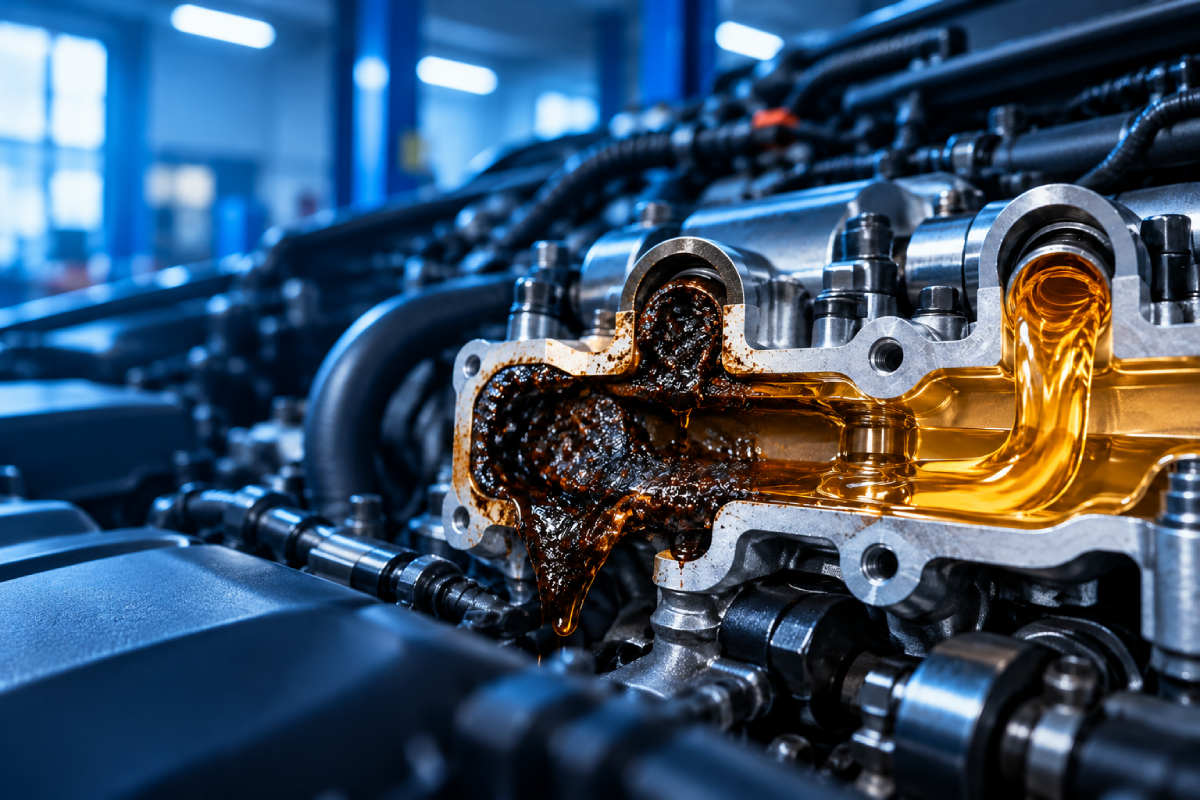
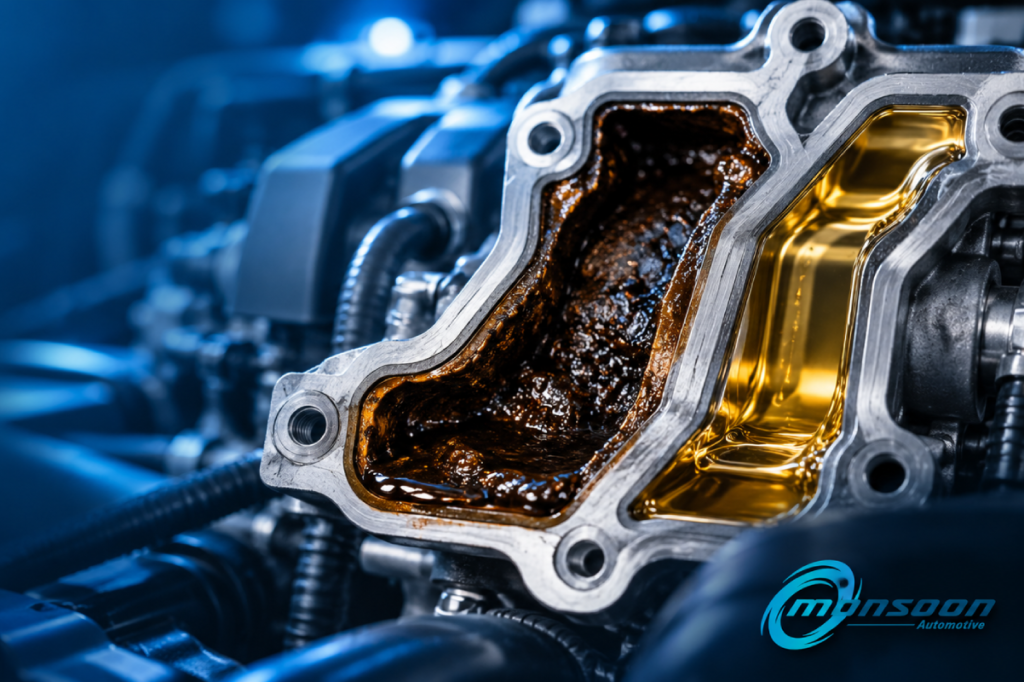
- Thick, tar-like deposits under the oil filler cap or on the dipstick. Dark oil alone doesn’t confirm sludge.
- Low oil pressure warning light that flickers or stays on.
- New engine knocking or ticking, which may signal inadequate lubrication.
- Rough idling, sluggish acceleration, or loss of power.
- Increased oil consumption or blue smoke from the exhaust.
- A Check Engine Light, sometimes linked to oil-flow problems affecting variable valve timing. These symptoms can have other causes, so have the engine inspected.
An auto repair shop can check oil pressure, scan for trouble codes, inspect the filter and accessible engine areas, and look for signs of coolant contamination. If the oil pressure light comes on while driving, stop the engine as soon as it’s safe. Continuing to run it can turn a developing problem into serious damage.
How Can You Prevent or Address Sludge?
Follow the oil-change interval and oil specification in your owner’s manual and your local mechanic shop recommendations.
Severe-service schedules may apply if you make frequent short trips, idle in traffic, tow, or drive in extreme heat. Check the oil level regularly, replace the oil filter with each oil change, and ask an expert technician to investigate unexplained oil loss, overheating, or possible coolant contamination.
If you suspect heavy sludge, don’t pour in a chemical flush or additive without professional advice. A fast flush can move deposits and create oil-flow problems in a badly sludged engine.
Depending on the condition, professional mechanics may recommend further inspection, gradual cleaning, or removing parts for manual cleaning.
A complete auto repair service center can assess the engine before recommending work.
Get Engine Oil Sludge Checked in Tucson, AZ at Monsoon Automotive
If you’ve spotted deposits, heard new engine noise, or seen an oil warning light, schedule an inspection before the problem gets worse.
Monsoon Automotive’s trained team provides automotive maintenance services and repairs for all makes and models at its Tanque Verde and Pantano locations in Tucson, Arizona, serving drivers across Pima County.
Since 2017, Monsoon Automotive has set a high standard for domestic, European, and Asian vehicle repairs. Our trained, certified mechanics use specialized automotive diagnostic equipment to identify oil-flow problems and recommend the right repair.
For honest, reliable, and timely service, schedule an inspection at our Tanque Verde or Pantano location in Tucson, Arizona.
Call our Tanque Verde location at (520) 305-4908 or the Pantano location at (520) 296-1037, and also you can reach us at our Facebook page.
Frequently Asked Questions
What causes engine oil sludge?
Sludge can form when oil breaks down and contaminants build up. Delayed oil changes, frequent short trips, excessive heat, coolant leaks, and a faulty PCV system can contribute.
Can short trips and Tucson heat contribute to oil sludge?
Frequent short trips may keep the engine from staying warm long enough to remove moisture and other contaminants. Excessive heat can speed up oil breakdown.
What are signs of engine oil sludge?
Signs may include tar-like deposits under the oil cap, an oil pressure warning, new engine noise, rough idling, increased oil use, or blue exhaust smoke. These symptoms can have other causes, too.
Can oil sludge cause low oil pressure?
Yes. Sludge can restrict oil passages or the pump pickup screen, which may reduce oil flow and pressure.
Is it safe to drive with the oil pressure warning light on?
Pull over somewhere safe and shut off the engine. Arrange a tow and have the vehicle inspected rather than continuing to drive.
Should I use an engine flush to remove suspected sludge?
Get professional advice first. A chemical flush may create oil-flow problems in a heavily sludged engine; the appropriate approach depends on the engine’s condition.